Monday, July 21, 2025

Exercises in compassion, part 2

As I mentioned in the earlier post, the dharma teacher at this meditation retreat integrated his spiritual teachings with a political point of view. Occasionally this made his teachings sound distinctly un-Buddhist, like the time that he suggested that We often believe that our moral authority is proportional to the extent to which we cling to our views, and to our moral anger at the malefactors in public life. He spent several minutes describing this perspective, and seemingly warming to it. The attendees were lapping it up. Finally he said No, no, it's all false and this approach doesn't work. Clinging-to-views isn't a productive way forward after all. (But I wonder how many people truly heard him say that.)

But as he discussed these things, he introduced the concept of "pathological do-gooders," or "pathological altruism." This is when someone just can't stop doing things for others, or when someone does things for others with a reckless disregard for his own well-being, or indeed for any cost to himself at all. I think the teacher's motivation must have been that many of his listeners sub­consciously believe that to be their moral ideal. That's what they believe they ought to be doing! Of course that's crazy, but consider the audience. And much of the teacher's advice here was very sound and sober. He reminded us that "Caring is costly," and that if we cling too tightly to our ideal of eliminating all suffering everywhere, we will burn out. One of the most basic Buddhist teachings, after all, is that clinging causes dukkha, or suffering. So to the extent that he was able to wean people away from their fantasies of redeeming the world, his teaching was entirely orthodox and wholesome.

What caught my attention was one of his incidental comments. He may have been quoting another author—my notes don't say, and I don't remember for sure. But he pointed out that there is one circumstance—and only one!—where "pathological do-gooders" seem normal, and where it seems the most natural thing in the world to throw away all other considerations in order to help others.

That one, unique circumstance is war. (Then as an afterthought he included floods, earthquakes, and other natural disasters as more or less equivalent.)

My first reaction was a sardonic smile: Gosh, could someone spin this into making a Buddhist argument for more wars? But then I began mulling.

In his classic memoir Storm of Steel, Ernst Jünger describes that when World War One broke out, Germans greeted it with enthusiastic idealism.

Movies made after World War Two—movies like The Best Years of Our Lives (1946) and The Man in the Gray Flannel Suit (1956)—treated as a commonplace the trouble that soldiers had returning to civilian life, because it lacks all the unity, cameraderie, ésprit, meaning, and purpose of life under fire.

Even an antiwar vehicle like the television series M*A*S*H could not help but celebrate the common purpose of the team at the (fictional) "4077th Mobile Army Surgical Hospital" during the Korean War. The last episode, in which a ceasefire goes into effect and the characters all go home, is both celebratory and deeply poignant. 

And surely we have all heard stories of people who accomplished deeds of great bravery and daring in wartime, who rescued their team from certain death with no thought of their own safety, who nonetheless could never settle down in peacetime and make something of themselves. The image feels like it should be a commonplace. Isn't it?

War puts all conventional values in question. 

  • Rank and status? Sure, they matter. But the man commanding an assault might be killed in the next moment; and any grunt with gumption and initiative can be given a battlefield promotion to take his place.
  • Wealth and acquisition? Anything you have acquired can be lost just as easily. But unexpected loot can also be found. It all comes down to luck, although some people may argue that the valorous tend to be luckier than the cowardly.
  • Comfort? As if!

So maybe it is possible to understand Jünger's talk of "idealism." Maybe I wasn't crazy a couple of years ago to argue that the experience of war really is the experience of "pure dynamic Quality" seen through a Social lens. Maybe when all life is being lived on the extreme edge, it makes sense that extreme, pathological altruism becomes the order of the day.

This is not an argument for more wars. But it does leave me with some sense of why certain authors have found peacetime petty and squalid and corrupt, compared with the moral purity they feel they have touched in war.

Maybe we, as humans, truly are made for war and catastrophe, not for peace and prosperity.

It's a conundrum. 


Exercises in compassion, part 1

A week ago, I attended a weekend-long non-residential retreat at the local State University. The theme was "Love in Turbulent Times"; based on my sense of the practitioners and the attendees, it could probably have been subtitled "How to Preserve Equanimity When the Bad Guys Won the Last Election." The dharma teacher tried valiantly to keep overt political statements out of his talks, but didn't really succeed. I wasn't surprised: I know this town and at least some of the local Buddhist community, so I expected that going in. And mostly it wasn't political, or not very.

He talked about compassion, among other topics, and this is one of the themes I found myself pondering. In particular, I remember when I first read Jack Kornfield's A Path With Heart, Kornfield wrote that one of the ways to test whether your spiritual path is a healthy one is to check whether you have become more open and compassionate with time, or more isolated and hard-hearted? (I discuss this passage in this post from eleven years ago.) So I asked myself: Am I more compassionate than I used to be? And I answered, Partly yes. I think I am more compassionate towards people I know, like Wife or Father. Certainly I get angry at them a lot less. What's less clear is whether I am more compassionate towards strangers, and the dharma teacher seemed to put some emphasis on compassion towards strangers in his talks. (You could probably use this recent post to argue that my compassion for strangers is not high.) On the other hand, I wonder how often "compassion for strangers" counts as real compassion, and how often it is merely performative, in order to make the do-gooder look good? So I've got something to meditate on.

Then the morning of the second day, I was confronted with a concrete exercise in compassion! I got to the university early, and pulled into the parking lot. As I pulled in, I saw one party just walking away. They were elderly, obviously not University people, and obviously attendees of the meditation retreat. So far, so good. But when I got to the parking kiosk, I realized they had walked off without paying. More exactly, they had activated the parking kiosk, and had recorded their license plate number. But they had not actually fed the machine any money! I assume this negligence has to have been caused by confusion or ignorance; if they had intended to park-and-dash, they wouldn't have initiated the process. What should I do?

I thought about it while paying for my own parking, and for too many minutes thereafter. I saw three options:

  1. Forget about the problem. In that case, campus parking enforcement would probably give them a ticket.
  2. Write down their license number, and then ask around at the retreat "Is this your car? You need to go back and pay for your parking!"
  3. Just pay their damned parking myself. (It didn't cost much.)

As I say, I spent way too much time thinking about this. In the end, I just paid for their parking. It seemed the easiest thing to do. (Strictly speaking, I guess it would have been easier to do nothing. But it would have bugged me if they had actually gotten a ticket.)

I do not know whether my decision was influenced by my rumination the previous day on the role of compassion in my life.  

Then the dharma teacher's remarks the second day sent my thoughts down a whole new path! See Part Two for details. 


Friday, July 18, 2025

Golden Bough in concert

OK, here's something different. The Celtic folk band Golden Bough, in concert.

I didn't attend in-person, but I did get a link to watch it live-streamed.

There were a few hiccups and glitches, but they are still recognizable.

They are still a delight to listen to.

One warning: you have to advance the video past the 16:00 mark (that's 16 minutes!) before you get anything. But after that it should be fine. Leave me a note if it's not.


I can't get Blogger to put up a window, but here is the link. 


Thursday, July 10, 2025

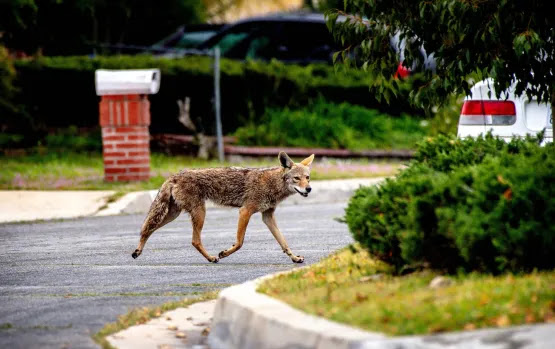
Feeding a coyote

Sometimes fate arranges the perfect metaphor. If only I felt I could take advantage of it!

When I talked with Marie a week ago, she was solemn and worried and upset and frightened, all over the deportations that the Administration has recently started enforcing. Mind you, Marie is a natural-born citizen. Her parents were natural-born citizens. She looks White, though apparently if you go far enough back one ancestor was Chippewa. In other words, there is about as much chance that she'll be deported as there is for Melania Trump. But that doesn't stop her from worrying. I've mentioned before that Marie suffers from TDS somethin' terrible, so naturally she believes the very worst it is possible to believe.

What does Marie know about immigration? She is friends with two different families who both think they have to leave the United States proactively before they are deported. In one of these families, the husband in English and the wife is Canadian; their son is a natural-born American. In the other family, the husband is American and the wife is Mexican, though you wouldn't guess it unless she told you. In both families, all the paperwork is in order and has been for many years. Again, these people are not the targets of any deportation effort. But try telling them that.

So I spent our weekly call a week ago trying to talk Marie down from what seemed to be—figuratively or emotionally speaking—a very high cliff.

When we talked yesterday, she was in a much better mood. It seemed that she had forgotten her earlier worries. But buried in her chit-chat about what had gone on the previous week was the news that she had seen a hungry coyote.

Marie lives in the suburbs. This is not normally coyote country. There are wild areas within driving distance, to be sure. But for a coyote to wander all the way into Marie's neighborhood, it must be either desperately hungry or else really bad at directions.  

And Marie has been leaving out food! What's more, she has seen the food disappear. So while she can't be intellectually certain that it's the coyote who has eaten it all, nonetheless she is morally certain that she has saved the coyote from starvation!

I asked her how long she plans to keep leaving out food? She didn't give a date, but in general she wants to keep him alive until he learns to hunt for himself.

Really? How's that going to work?

Monday, July 7, 2025

Boxes of books

As usual—at least if you don't count when I spend the holiday with Marie and her family—I spent the Fourth of July with Mother, Brother, and SIL. (See also, e.g., here and here.)

The Fourth was on a Friday. I drove down in the late morning, and encountered pleasantly little traffic. 

Brother and SIL did all the cooking, and we started to eat in the very late afternoon, as the heat started to lift.

Brother and SIL have also been working their way through boxes of papers in Mother's garage, mostly papers left behind by Father when he died. They have been looking for things that might be worth saving, and trashing the rest. There has been a lot to trash. I don't know how carefully they are filtering them, but I do know that he left behind a lot of junk. That said, I did scan through a box of papers that they had marked "Trash" and found a draft copy of Mother's doctoral dissertation, along with a letter to her from her old faculty advisor. I hope this was an exception.

Meanwhile, Brother has asked me to go through the boxes of books in the garage. There are a lot of these. But I wonder if we are all agreed on what to toss?

When I began to tackle this task on the Fifth, I found—in boxes that had been sitting in the garage—books that I had given as gifts: at the very least there was one that I gave Mother after Father died, and one that I gave Father while he was still alive. Why were they in boxes in the garage, when they used to be on shelves in the house? Clearly someone had decided that they didn't deserve shelf-space. I don't credit Mother with that much energy or initiative these days, and I know it wasn't me. That leaves Brother and SIL. Perhaps unsurprisingly, I judged that both books belonged in the "Keep" pile. So now I wonder if I'll have a fight with Brother and SIL when they find out. (At the moment, I think they don't realize it yet.)

My first pass through the boxes generated three categories of books. 

Sunday, June 29, 2025

Death by laughter

Chrysippus of Soli died from laughing.
Can you die from laughing? Today I learned that Chrysippus of Soli, the Stoic philosopher, was said to have died laughing at one of his own jokes.

I remember Father mentioned one time that he thought he was going to die of laughter. I was somewhere else for the event itself, possibly away at college. But it was one evening and he was sitting up late. I don't remember if Mother was sitting up with him, or if she had started getting ready for bed. Also, I don't remember what provoked his laughter—whether it was something he read (perhaps The Funniest Joke in the World), or just a funny idea that occurred to him. Probably it was something he read.

Anyway, he described that he started laughing and laughing, and then found that he couldn't stop. This "couldn't stop" experience wasn't frightening though—just very pleasant. Finally he laughed so much that he felt himself detach from his body. He said it felt like he could just float away and go somewhere else, and he thought about it for a while. Finally he decided, no, he would rather stay where he was. So he nestled back down into his body, stopped laughing, and let his life return to normal.

When he told me this story, Mother commented that she could hear him laughing (or, as I say, maybe she was still in the same room), and was worried if he would be OK because it went on so long. She did not say she was afraid he would die. And for his part, he didn't appear to regard the prospect of death with fear. The way he described it, it just sounded interesting. But no, he had responsibilities still in life, and people to attend to. So he decided not to move on just yet.

If I've remembered the approximate year correctly, that would have been before his grandsons were born ... possibly even before I married Wife. So he would have missed a lot.

When he finally did die, it wasn't from laughing. I hope it was as free of fear and as interesting to the inquiring mind as the time he almost laughed himself to death.

I guess there's no way to know.    


Blast from the past: Intentions

Hosea's log: Star date 1992-10-11 ... or it might have been 1992-11-10. It was well into the autumn of 1992, and right around the full moon—maybe plus or minus a day. No more than a day.

People who are comfortable with what might be called the woo-woo end of New Age spirituality sometimes talk about "releasing intentions into the Universe." It's not always clear how this differs either from prayer or from magic, but the language is vague enough to offer plausible deniability if one is challenged by a hard-core materialist. "Oh no, I wasn't doing anything supernatural. I was just focusing my attention on a certain goal for the sake of psychological clarity."

The thing is, sometimes it works. Debbie once told me that a few months before she and I met up again after twenty years, she found herself getting tired of living alone after her divorce, and released an intention into the Universe that she meet someone romantically. Then she met me.

Normally I'm not really organized enough to do the same thing, but I remember one time that I definitely did. It was a long-term intention; and while I didn't follow up scrupulously to check every bit of it against a schedule, in the long run it did more or less come true as well.

The time was 1992. I was working a contract job nearly 120 miles from home—by which I mean the apartment I shared with Wife, while she was in graduate school. I drove down on Monday morning and back on Friday evening. During the week I stayed with my parents, which was just a little over 40 miles away from my work. The traffic was terrible, and I wasn't making a lot: enough to pay our rent, but not enough to keep up with Wife's already-riotous spending. But it was what I could get, and all that driving didn't leave me a lot of time to look for a better job.

For some years I had still nursed fantasies of going back to graduate school myself. I had left abruptly (as I describe briefly here) and my faculty advisor was kind enough to hold open my space in my fellowship program for one year. Well, by this time it had been closer to six years, and I wasn't still in touch with him. But I still clung to the fantasy that maybe someday I could go back.

Then in the fall of 1992 I learned that my former faculty advisor had died. Of course there was no realistic way that I would ever have gone back, but this shattered my fantasy. I wept for him—by which of course I mean "for myself and my lost dreams"—harder than I have ever wept for a dead relative. And then, not long after, I found myself walking out to the parking lot after another long day, after sunset, with the stars twinkling, and the most enormous full moon hanging just over the horizon.